
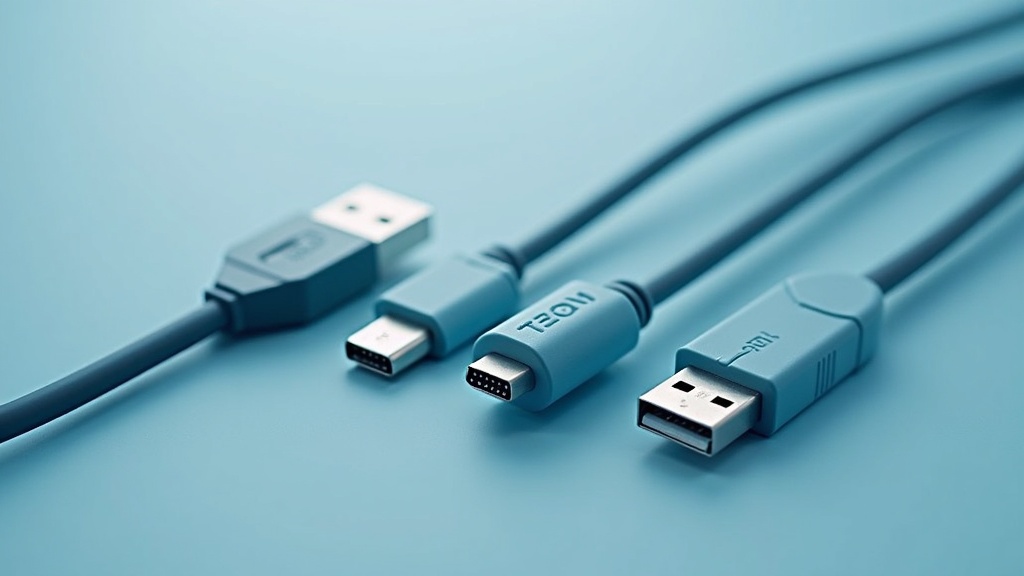
USB Cables and Adapters Guide: Essential Connectivity Solutions
This USB cables and adapters guide provides essential information for selecting the right connectivity solutions for your ecommerce jewelry business, covering types, compatibility, and best practices for efficient operations.
Table of Contents
- Understanding USB Cables and Adapters
- USB Types and Their Applications in Jewelry Ecommerce
- How to Choose the Right USB Cables and Adapters
- Troubleshooting Common USB Connectivity Issues
- Frequently Asked Questions
- Comparison: USB Standards for Ecommerce
- Practical Tips for USB Cable Management
- Final Thoughts on USB Cables and Adapters
- Further Reading
Article Snapshot: This USB cables and adapters guide is a comprehensive resource for jewelry store owners. It covers USB types, selection criteria, and troubleshooting tips to optimize ecommerce operations and device connectivity.
USB Cables and Adapters in Context
No statistics available. Please refer to the guide for general information.
Introduction
This USB cables and adapters guide is essential for anyone running an ecommerce jewelry store from karmacraftscorner.com. With multiple devices like barcode scanners, printers, and cameras, understanding USB connectivity can streamline your workflow. This article will walk you through the basics, from USB types to troubleshooting, ensuring your jewelry business stays connected efficiently.
Understanding USB Cables and Adapters
This USB cables and adapters guide starts with the fundamentals. USB stands for Universal Serial Bus, a standard for connecting peripherals to computers. For a jewelry store, these cables link your point-of-sale system, label printers, and photography equipment.
Key Components
Each USB cable has two ends: Type-A (the standard rectangular plug) and Type-B, Mini, Micro, or USB-C. Adapters convert one type to another, such as USB-C to USB-A, which is useful for newer laptops connecting to older printers. Understanding these components helps you avoid compatibility issues.
USB Types and Their Applications in Jewelry Ecommerce
This USB cables and adapters guide explores different USB types. USB 2.0 is common for older devices, while USB 3.0 offers faster data transfer for high-resolution product images. USB-C is becoming the standard for modern laptops and smartphones.
Choosing for Your Business
For a jewelry store, prioritize USB 3.0 or higher for photo editing and inventory management. Use USB-C adapters if you have a newer laptop. Refer to the superlewiss guide for more on device compatibility.
How to Choose the Right USB Cables and Adapters
This USB cables and adapters guide section helps you select the best options. Consider cable length, data speed, and build quality. For a jewelry ecommerce setup, shorter cables reduce clutter, while braided cables last longer.
Compatibility Checklist
- Check device ports: USB-A, USB-C, or Micro-USB.
- Match data speed: USB 2.0 for basic tasks, USB 3.0 for large files.
- Use adapters for mixed-device setups.
For HDMI connections from laptops to monitors, consider HDMI cables for laptops from connectivityproducts.com to enhance your display setup.
Troubleshooting Common USB Connectivity Issues
Even with a good USB cables and adapters guide, issues arise. Common problems include loose connections, driver errors, or power delivery issues. For jewelry store equipment, ensure cables are securely plugged and drivers are updated.
Quick Fixes
If a device isn’t recognized, try a different port or cable. Update drivers via Device Manager on Windows. For power issues, use a powered USB hub. Check the coffeebeancrypto guide for advanced troubleshooting tips.
Questions from Our Readers
What is the best USB cable for a jewelry photography setup?
For jewelry photography, use USB 3.0 or USB-C cables for fast transfer of high-resolution images. A braided cable is durable for frequent use. Ensure compatibility with your camera and computer.
Can I use a USB-C to USB-A adapter with my older printer?
Yes, a USB-C to USB-A adapter works with most older printers that use USB-A ports. However, data speed may be limited to the printer’s maximum, typically USB 2.0. For best results, use a direct USB-A cable.
How do I extend the range of my USB devices?
Use active USB extension cables or USB hubs with built-in signal boosters. For distances over 5 meters, consider a USB over Ethernet extender. This is useful for placing printers or scanners away from your computer.
What is the difference between USB 2.0 and USB 3.0 for ecommerce?
USB 3.0 is up to 10 times faster than USB 2.0, making it ideal for transferring large product images or videos. USB 2.0 is sufficient for keyboards, mice, and basic barcode scanners. For a jewelry store, USB 3.0 is recommended for photo editing stations.
Comparison: USB Standards for Ecommerce
When selecting USB cables and adapters for your jewelry business, understanding the differences between standards helps. Below is a comparison of common USB types.
| USB Standard | Data Speed | Best Use |
|---|---|---|
| USB 2.0 | 480 Mbps | Basic peripherals (keyboard, mouse) |
| USB 3.0 | 5 Gbps | Photo transfer, external drives |
| USB-C | Up to 10 Gbps | Modern laptops, fast charging |
Practical Tips for USB Cable Management
Effective cable management boosts productivity in your jewelry store. Use cable ties or clips to organize cords. Label cables for easy identification. Invest in a quality USB hub to expand ports. For long-term durability, choose braided cables over plastic ones. Regularly update device drivers to prevent connectivity issues. This USB cables and adapters guide emphasizes keeping spare adapters on hand for emergencies.
For more about Tshirtinsight guide, see discover tshirtinsight guide insights.
Final Thoughts on USB Cables and Adapters
This USB cables and adapters guide has provided the essentials for your ecommerce jewelry business. From understanding types to troubleshooting, you’re now equipped to choose the right cables. For more resources, explore our superlewiss guide for detailed insights on device connectivity.
Further Reading
- USB Implementers Forum. USB.org.
https://www.usb.org/