
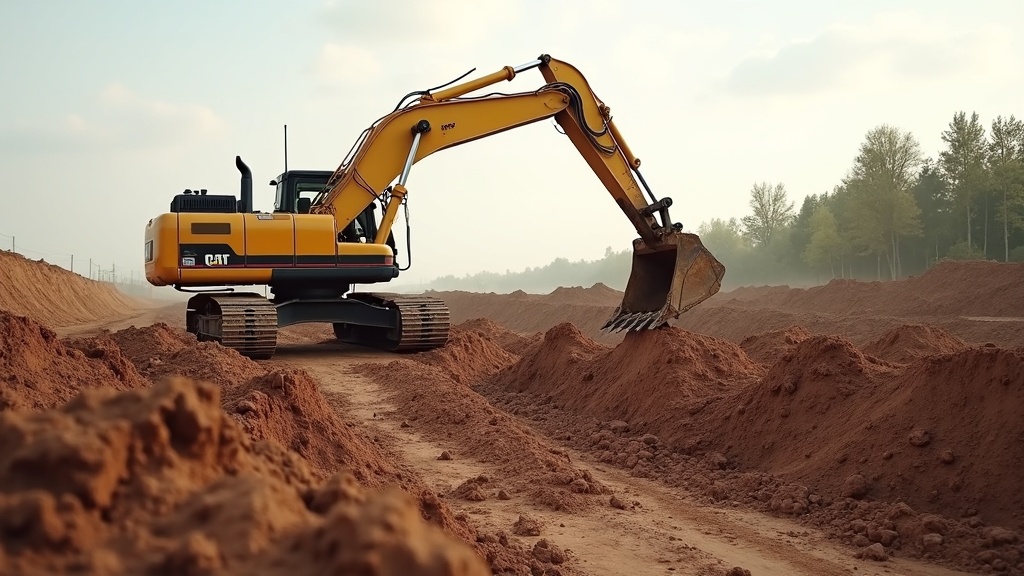
Backfill Excavation Techniques for Safer Mining Operations
Backfill excavation is a critical process in mining and construction that involves refilling dug-out areas with suitable materials to ensure structural stability and worker safety. This article explores the essential techniques, costs, safety regulations, and best practices for effective backfill excavation in mining environments.
Table of Contents
- Understanding Backfill Excavation Fundamentals
- Material Selection and Compaction Methods
- Safety Standards and Regulatory Compliance
- Cost Factors and Project Planning
- Frequently Asked Questions
- Comparison of Backfill Methods
- Practical Tips for Backfill Excavation
- Final Thoughts on Backfill Excavation
Article Snapshot
Backfill excavation is the process of refilling trenches, pits, or mined-out voids with engineered materials to restore ground stability. This article covers material selection, compaction techniques, OSHA safety rules, cost benchmarks, and practical guidance for mining and heavy construction projects.
Backfill Excavation in Context
- The U.S. excavation contractors industry is projected to generate $142.5 billion in revenue in 2026, growing at a 2.8% CAGR since 2021 (IBISWorld, 2026)[1].
- OSHA requires a protective system for any trench deeper than 5 feet during excavation and backfill operations (MEP Academy, 2024)[2].
- Residential trench backfilling costs range from $4 to $12 per linear foot, with complex projects reaching $20 per linear foot (JOUAV, 2024)[3].
Understanding Backfill Excavation Fundamentals
Backfill excavation is the systematic process of replacing excavated earth or rock with selected materials to support structures, prevent ground collapse, and restore site conditions. In mining operations, this process is essential for filling underground voids after ore extraction, stabilizing tunnel walls, and preparing surfaces for subsequent construction phases.
The core objective of any backfill excavation project is to achieve uniform density and load-bearing capacity. This requires careful planning of material composition, placement techniques, and compaction schedules. According to the JOUAV Construction Content Team, backfilling is the process of strategically refilling an excavated area with suitable materials, typically after a foundation, trench, or other structure has been constructed (JOUAV, 2024)[3]. This definition highlights the strategic nature of the work – it is not simply dumping dirt back into a hole.
In mining contexts, backfill excavation often uses cementitious materials like grout or paste fill to achieve high strength. For those seeking specialized solutions for underground mine stabilization, backfill grouting in mining offers targeted techniques for filling voids and reinforcing rock mass. Understanding the fundamental principles of soil mechanics, drainage, and load distribution is the first step toward successful backfill operations.
Modern backfill excavation also incorporates geotechnical monitoring to verify compaction levels and detect settlement risks. Technologies such as nuclear density gauges and dynamic cone penetrometers allow operators to test in-place density and adjust methods in real time. This data-driven approach reduces the likelihood of post-construction failures and extends the lifespan of the infrastructure.
Key Terminology in Backfill Operations
Professionals in the field should be familiar with terms such as “engineered fill,” “compaction ratio,” “lift thickness,” and “optimum moisture content.” Each of these parameters influences the final stability of the backfilled area. For example, lift thickness – the depth of each layer of placed fill – typically ranges from 6 to 12 inches, depending on the compaction equipment used. Exceeding recommended lift thickness can lead to inadequate density and future settlement.
Material Selection and Compaction Methods
Choosing the right backfill material is a critical decision that affects both short-term workability and long-term performance. In mining backfill excavation, materials are often classified as granular (sand, gravel, crushed stone) or cohesive (clay, silt, cement-treated soils). Granular materials drain well and compact easily, making them ideal for structural backfill behind retaining walls or around foundations. Cohesive materials offer lower permeability but require precise moisture control during compaction.
The compaction process itself involves applying mechanical energy to increase soil density and reduce voids. Common compaction equipment includes vibratory rollers, plate compactors, and rammers. The DOZR Construction Education Team notes that backfilling is the process of refilling excavations and trenches with select materials to ensure the integrity of new construction (DOZR, 2024)[4]. This emphasis on “select materials” underscores that not all excavated soil is suitable for reuse; organic matter, large rocks, and debris must be removed or processed before placement.
For mining applications, cemented backfill – a mixture of tailings, cement, and water – provides high strength and allows for steep excavation angles. This method is particularly valuable in underground mines where ground support is paramount. In backfill excavation, material selection directly determines safety and project success.
Compaction quality control involves testing each lift for density and moisture content. The Proctor test, a standard laboratory procedure, establishes the maximum dry density achievable for a given material at optimum moisture. Field technicians then compare in-place density to this benchmark, aiming for at least 95% of maximum dry density for structural fills. Failure to meet these targets can result in differential settlement, cracking, or even catastrophic collapse.
Safety Standards and Regulatory Compliance
Worker safety is the paramount concern in any backfill excavation operation. The U.S. Occupational Safety and Health Administration (OSHA) enforces strict regulations for trenching and excavation work. One of the most important rules is the requirement for a protective system – such as shoring, shielding, or sloping – when trench depth exceeds 5 feet. The MEP Academy confirms that shoring becomes necessary to prevent the walls of the trench from collapsing inward under pressure, ensuring the safety of workers and adjacent structures when excavating and backfilling (MEP Academy, 2024)[2].
Beyond OSHA mandates, industry organizations provide additional guidance. The Common Ground Alliance Best Practices Committee states that the excavator protects all facilities from damage when backfilling an excavation (Common Ground Alliance, 2024)[5]. This principle extends to protecting underground utilities, pipelines, and cables that may be present in the excavation zone. Pre-excavation utility locating, hand digging near marked lines, and careful backfill placement are all essential safety practices.
In mining environments, additional hazards include rockfall, groundwater inflow, and exposure to hazardous materials. Backfill excavation plans must address these risks through engineering controls, personal protective equipment, and emergency response procedures. Regular safety training and toolbox talks help reinforce safe work practices among crew members.
Sanitation District No. 1 (SD1) of Kentucky emphasizes that contractors shall provide all labor, materials, equipment and incidentals required to perform all excavating, backfilling, filling and grading (SD1, 2019)[6]. This comprehensive responsibility includes ensuring that all safety measures are in place before work begins. Compliance with local, state, and federal regulations is not optional – it is a legal and ethical obligation.
Cost Factors and Project Planning
The cost of backfill excavation varies widely based on project scope, material availability, site conditions, and labor requirements. According to JOUAV, typical residential trench backfilling costs range from $4 to $12 per linear foot, with complex projects reaching $20 per linear foot or more (JOUAV, 2024)[3]. For mining operations, costs can be significantly higher due to the need for specialized equipment, cemented backfill materials, and extensive quality control testing.
When estimating material quantities, planners should account for waste and compaction. JOUAV recommends adding 10% to 15% extra material to compensate for volume loss during compaction (JOUAV, 2024)[3]. This allowance ensures that the final fill level meets design specifications without requiring costly rework or additional material procurement mid-project.
The U.S. excavation contractors industry is substantial, with an estimated 236,000 businesses operating in 2026 and generating $142.5 billion in revenue (IBISWorld, 2026)[1]. This scale indicates strong demand for backfill excavation services across construction, mining, and infrastructure sectors. The compound annual growth rate of 2.8% from 2021 to 2026 suggests steady, if moderate, expansion driven by ongoing development and maintenance needs.
Effective project planning involves creating a detailed backfill excavation plan that includes material sourcing, equipment mobilization, compaction testing schedules, and contingency measures for unexpected conditions such as encountering groundwater or unstable soil. Engaging a geotechnical engineer early in the planning phase can prevent costly mistakes and ensure that the backfill design meets the specific load-bearing and drainage requirements of the project.
Important Questions About Backfill Excavation
What is backfill excavation and why is it important in mining?
Backfill excavation is the process of refilling excavated voids – such as trenches, pits, or mined-out stopes – with engineered materials to restore ground stability, support structures, and prevent collapse. In mining, it is critically important because it fills underground voids left after ore extraction, reducing the risk of subsidence, improving ground control, and allowing for safer access to adjacent mineral deposits. Proper backfill excavation also helps manage water flow and supports the overall structural integrity of the mine.
What materials are commonly used for backfill excavation?
Common backfill materials include granular soils (sand, gravel, crushed stone), cohesive soils (clay, silt), and engineered mixtures such as cemented backfill or paste fill. Granular materials are preferred for their excellent drainage and compaction characteristics, making them ideal for structural backfill behind retaining walls or around foundations. In mining, cemented backfill – a blend of tailings, cement, and water – provides high compressive strength for underground void filling. The selection depends on project requirements, including load-bearing capacity, permeability, and cost.
What are the key safety regulations for backfill excavation?
Key safety regulations include OSHA’s requirement for a protective system (shoring, shielding, or sloping) in trenches deeper than 5 feet. Workers must also be protected from cave-ins, falling objects, and hazardous atmospheres. Pre-excavation utility locating is mandatory to avoid damaging underground lines. The Common Ground Alliance Best Practices emphasize protecting all facilities from damage during backfilling. Additionally, regular inspections by a competent person are required to identify and address potential hazards throughout the excavation and backfill process.
How is backfill excavation cost estimated?
Backfill excavation costs are estimated based on factors such as trench depth and length, material type and source, compaction requirements, labor rates, and equipment needs. Typical residential costs range from $4 to $12 per linear foot, with complex projects reaching $20 per linear foot. Planners should add 10% to 15% extra material to account for compaction and waste. For mining projects, costs are higher due to specialized materials and equipment. A detailed geotechnical assessment and project plan help produce accurate estimates.
Comparison of Backfill Methods
Choosing the right backfill method depends on project scale, material availability, and performance requirements. The table below compares two common approaches used in construction and mining backfill excavation.
| Method | Materials | Typical Applications | Cost Range | Compaction Requirement |
|---|---|---|---|---|
| Granular Backfill | Sand, gravel, crushed stone | Trench backfill, foundation walls, pipe bedding | $4–$12 per linear foot | 95% max dry density per Proctor |
| Cemented Backfill | Tailings, cement, water | Underground mine void filling, slope stabilization | $15–$30 per linear foot | Self-compacting; requires curing time |
Practical Tips for Backfill Excavation
Successful backfill excavation requires attention to detail and adherence to proven practices. Here are actionable tips for project managers and field crews:
- Test material before placement: Conduct Proctor tests and moisture content analysis on proposed backfill materials to ensure they meet project specifications. Using unsuitable material leads to settlement and structural issues.
- Compact in thin lifts: Place backfill in layers no thicker than 6 to 12 inches, depending on equipment. Thicker lifts prevent adequate compaction and increase the risk of future settlement.
- Monitor moisture content: Maintain optimum moisture content during compaction. Too dry, and the material won’t densify; too wet, and it becomes unstable. Use water trucks or aeration as needed.
- Protect underground utilities: Use hand tools near marked utility lines and place initial backfill carefully to avoid damage. The Common Ground Alliance guidelines are an excellent resource for utility protection.
- Verify compaction continuously: Use field density tests (nuclear gauge or sand cone) on every lift. Document results to create a quality assurance record for the project.
Final Thoughts on Backfill Excavation
Backfill excavation is a fundamental process in mining and construction that directly impacts safety, structural integrity, and project costs. By understanding material properties, adhering to safety regulations, and implementing proper compaction techniques, operators can achieve durable and reliable results. The U.S. excavation industry’s steady growth underscores the ongoing demand for skilled professionals in this field. Whether you are managing a small trench backfill or a large underground mine void, investing in quality planning and execution pays dividends in long-term performance. For more detailed guidance on specialized backfill techniques, explore advanced backfill grouting solutions for mining applications.
Useful Resources
- IBISWorld. Excavation Contractors Industry in the US – Market Research Report.
https://www.ibisworld.com/united-states/industry/excavation-contractors/206/ - MEP Academy. Excavation and Backfill Basics (Video).
https://www.youtube.com/watch?v=Ykw12bfeWV8 - JOUAV. What is Backfilling in Construction?
https://www.jouav.com/blog/backfilling.html - DOZR. What is Backfilling and How It Shapes Construction Projects.
https://dozr.com/blog/what-is-backfilling - Common Ground Alliance. 5.27 Backfilling – CGA Best Practices.
https://bestpractices.commongroundalliance.com/5-Excavation/527-Backfilling - Sanitation District No. 1. SECTION 02220 – Excavation and Backfill.
https://www.sd1.org/DocumentCenter/View/302/10-28-2019-Excavation-and-Backfill-PDF