
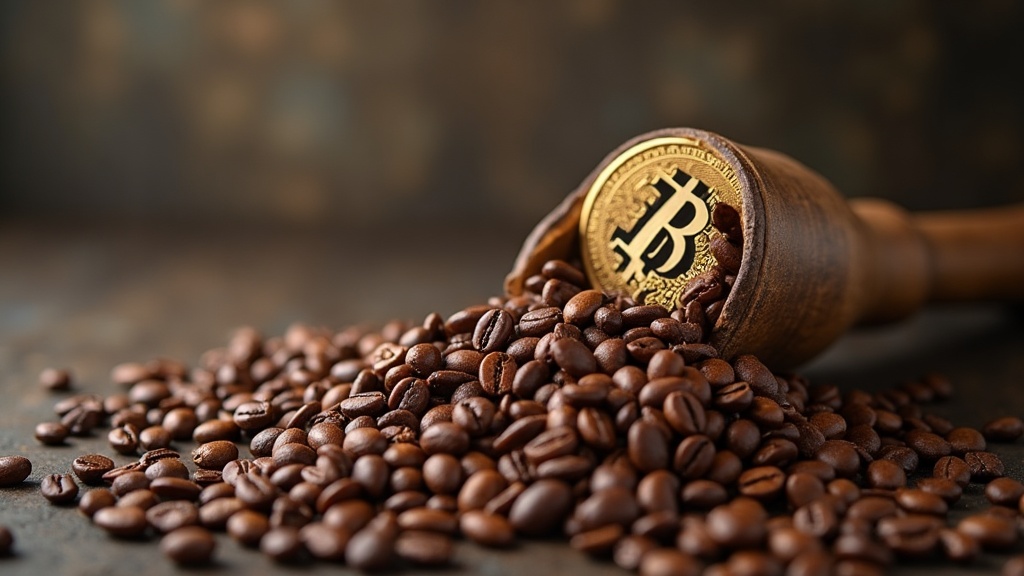
The Complete coffeebeancrypto guide
Discover how blockchain transforms agriculture with our complete coffeebeancrypto guide. Learn about tokenized commodities, smart contracts, and market trends.
Table of Contents
- Understanding Tokenized Commodities
- Mechanics of Agricultural Tokens
- Enhancing Supply Chain Transparency
- Economic Impact and Farm-Gate Prices
- Questions from Our Readers
- Comparing Trading Methods
- Practical Tips for Market Participants
- The Bottom Line
Key Takeaway

This coffeebeancrypto guide explains how blockchain technology digitizes physical agricultural products. Tokenized commodities create digital representations of physical assets, enabling faster settlement, improved supply chain transparency, and decentralized finance opportunities for global commodity trading markets.
Market Snapshot
- The estimated value of tokenized real-world assets is projected to reach 16 trillion dollars by 2030 (Boston Consulting Group, 2025)[1].
- Real assets such as commodities are expected to account for 69 percent of the tokenization market by 2030 (Boston Consulting Group, 2025)[1].
- Tokenized real-world assets report an average reduction in settlement time of 80 percent compared to traditional processes (World Economic Forum, 2025)[2].
The intersection of agriculture and digital finance is rapidly evolving. This coffeebeancrypto guide explores how blockchain agriculture is reshaping the way we buy, sell, and track physical goods. By converting tangible harvests into digital assets, the industry is unlocking new levels of efficiency and transparency. Investors and farmers alike are discovering the benefits of this technological shift. In the following sections, we will break down the mechanics of tokenized commodities, examine supply chain improvements, and analyze the economic impact on global markets. Whether you are a seasoned trader or a curious observer, understanding these digital innovations is essential for navigating modern capital markets.
Understanding Tokenized Commodities
The concept of converting physical harvests into digital tokens is no longer just a theoretical experiment. As outlined in this coffeebeancrypto guide, the transition from traditional trading to blockchain-based systems is accelerating. Tokenization involves creating a digital representation of a physical asset on a distributed ledger. This process allows fractional ownership, faster transfers, and broader access to global markets.
Maxim Galash, CEO of Coinchange Financials Inc., notes that the sector is maturing rapidly. He states, “Tokenization of real-world assets is moving from experimentation to implementation, and commodities like coffee beans are a natural fit because they already trade in standardized contracts, have deep markets, and can benefit from improved transparency and settlement efficiency” (World Economic Forum, 2026)[3].
This shift is driven by the need for better settlement efficiency and reduced operational costs. Traditional commodity trading often involves multiple intermediaries, lengthy paperwork, and delayed settlements. By utilizing smart contracts, market participants can automate transactions and ensure that funds are released only when specific conditions are met. This reduces counterparty risk and streamlines the entire trading process. As a result, agricultural tokens are becoming a vital component of modern decentralized finance ecosystems.
Mechanics of Agricultural Tokens
Creating Digital Representation
To fully grasp the concepts in this coffeebeancrypto guide, one must understand the underlying mechanics. When a farmer or cooperative harvests a crop, the physical yield is stored in a certified warehouse. A digital token is then minted on a blockchain, representing a specific quantity and quality of that stored harvest. This token can be traded, collateralized, or held as an investment.
Nitin Gaur, Managing Director at State Street Digital, explains the core value proposition. He notes, “When you tokenize a commodity such as coffee, you are essentially creating a digital representation of a physical asset that can be traded, collateralized and settled with the speed and programmability of crypto while still anchored to real-world value” (CoinDesk, 2026)[4].
Investors constantly look for unique digital assets that offer tangible backing. The programmability of these tokens allows for complex financial instruments to be built on top of them. For instance, a smart contract can automatically distribute dividends to token holders based on the sale price of the underlying physical crop. This fusion of physical assets and digital innovation is what makes this coffeebeancrypto guide so relevant to modern investors.
Enhancing Supply Chain Transparency
One of the most significant advantages highlighted in this coffeebeancrypto guide is the dramatic improvement in traceability. Consumers and regulators increasingly demand proof of ethical sourcing and environmental sustainability. Blockchain technology provides an immutable record of the product’s journey from the farm to the cup. Every transfer of ownership, quality inspection, and shipping milestone is recorded on the ledger.
However, achieving this at scale requires robust infrastructure. Fabian Vogelsteller, a prominent blockchain developer, emphasizes the importance of data integrity. He explains, “For agricultural products like coffee beans, tokenization only works at scale if you have reliable on‑chain proofs about the underlying inventory – who stores it, where it is, and under which legal framework it can be redeemed” (Messari, 2026)[5].
To ensure these on-chain proofs are accurate, projects must integrate Internet of Things sensors and third-party audits. This ensures that the digital token accurately reflects the physical reality. For those interested in the broader implications of this technology, reviewing a comprehensive real-world asset tokenization report provides deeper insights into how these systems are standardized across different industries. Ultimately, enhanced supply chain transparency builds trust and allows ethical producers to command premium prices in the market.
Economic Impact and Farm-Gate Prices
The ultimate goal of implementing blockchain agriculture is to improve the livelihoods of the producers. A thorough coffeebeancrypto guide must address how these technologies affect farm-gate prices. Historically, smallholder farmers receive a tiny fraction of the final retail price due to a long chain of intermediaries. Tokenization aims to shorten this chain, connecting producers directly with global buyers and investors.
By removing unnecessary middlemen, a larger share of the profit can flow back to the farmers. Furthermore, tokenized crops can be used as collateral in decentralized finance protocols, giving farmers access to credit that was previously unavailable to them. This financial inclusion is critical for funding future harvests and investing in sustainable farming practices.
Whether you are evaluating agricultural tokens for your portfolio or exploring new asset classes, understanding value retention is key. In the context of commodity trading, value retention means ensuring that the primary producers are fairly compensated. When farmers capture more of the upside, they can invest in better equipment and higher-quality crops, which in turn benefits the entire supply chain and improves the overall quality of the commodity.
Questions from Our Readers
What is the main purpose of a coffeebeancrypto guide?
How do smart contracts improve commodity trading?
Can agricultural tokens guarantee sustainable supply chains?
What are the risks of investing in digital assets?
Comparing Trading Methods
Evaluating the differences between traditional and modern approaches highlights the efficiency gains of blockchain systems. The following table contrasts key aspects of conventional commodity markets with tokenized alternatives.
| Feature | Traditional Trading | Tokenized Trading |
|---|---|---|
| Settlement Time | Days to weeks | Minutes to hours |
| Market Access | Institutional focus | Retail and institutional |
| Traceability | Fragmented records | Immutable ledger |
| Intermediaries | Multiple brokers | Automated smart contracts |
As shown, tokenized trading significantly reduces friction, making this coffeebeancrypto guide essential for understanding these modern efficiencies.
Practical Tips for Market Participants
Navigating the tokenized commodity space requires a strategic approach. Here are actionable steps to maximize your success and mitigate risks when engaging with agricultural tokens.
- Verify the Oracle: Always check how the physical asset data is fed into the blockchain. Reliable third-party audits and sensor integrations are crucial for accurate on-chain proofs.
- Understand the Legal Framework: Ensure the token represents a legally enforceable claim to the physical commodity in the jurisdiction where it is stored. Legal clarity protects your investment.
- Monitor Liquidity Pools: Assess the trading volume and depth of the specific agricultural token. High liquidity ensures you can enter and exit positions without significant price slippage.
By following these best practices, participants can leverage digital innovations safely. Staying informed through continuous research and utilizing resources like this coffeebeancrypto guide will help you adapt to the rapidly changing landscape of decentralized finance and real-world asset tokenization.
The Bottom Line
The integration of blockchain technology into agriculture is transforming how we perceive and trade physical goods. This coffeebeancrypto guide has highlighted the immense potential of tokenized commodities to enhance transparency, improve settlement efficiency, and empower smallholder farmers. As the market matures, the line between physical harvests and digital assets will continue to blur, creating new opportunities for investors and producers alike. To stay updated on the latest trends in digital innovation and explore more insightful content, continue reading the articles available on karmacraftscorner.com.
Useful Resources
- Future of Asset Tokenization. Boston Consulting Group.
https://www.bcg.com/publications/2025/future-of-asset-tokenization - Real-World Asset Tokenization 2025. World Economic Forum.
https://www.weforum.org/reports/real-world-asset-tokenization-2025 - Real world asset tokenization: from narrative to adoption. World Economic Forum.
https://www.weforum.org/agenda/2026/03/real-world-asset-tokenization-from-narrative-to-adoption/ - How real-world asset tokenization will reshape capital markets. CoinDesk.
https://www.coindesk.com/consensus-magazine/2026/02/11/how-real-world-asset-tokenization-will-reshape-capital-markets/ - Standards and infrastructure for tokenized real-world assets. Messari.
https://www.messari.io/report/standards-and-infrastructure-for-tokenized-real-world-assets
For more about Coffeebeancrypto guide, see Coffeebeancrypto Guide.