
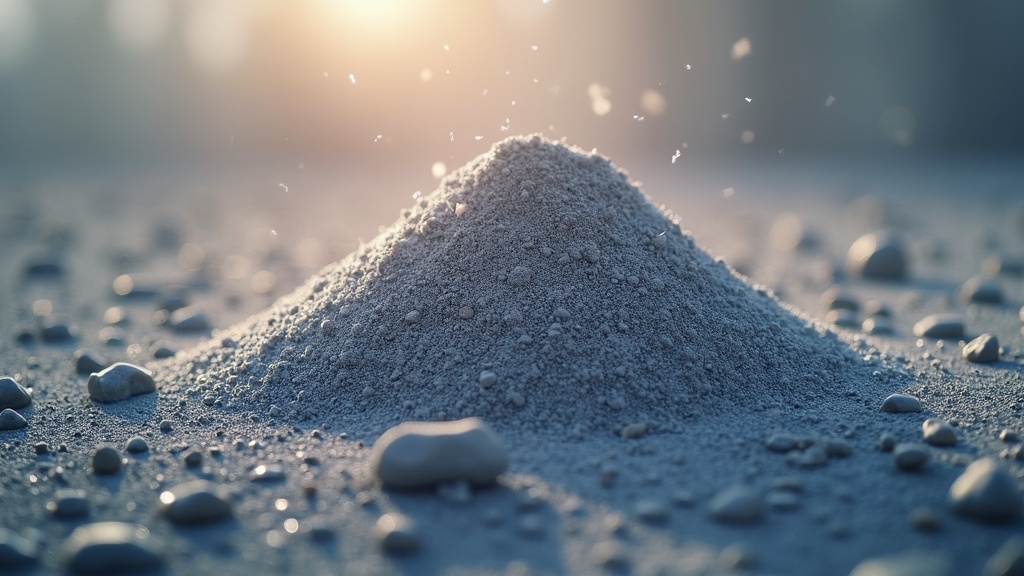
Granular Backfill in Sustainable Mining and Engineering
Discover how granular backfill improves mining sustainability and structural stability. Learn about aggregate properties, market trends, and eco-friendly methods.
Table of Contents
- Quick Summary
- By the Numbers
- Introduction
- Environmental and Structural Benefits in Mining
- Civil Engineering and Infrastructure Applications
- Market Trends and Economic Drivers
- Material Selection and Quality Control
- Important Questions About Granular Backfill
- Comparing Ground Support Methods
- Practical Tips for Implementation
- Final Thoughts on Granular Backfill
Quick Summary
Granular backfill is a specially prepared aggregate material used to fill voids in mining and construction to prevent surface subsidence and support structural loads. This article explores its ecological benefits, mechanical properties, and growing market demand in modern extraction and civil engineering projects.
By the Numbers
- The mine backfill services market was valued at 7.8 billion dollars in 2025 (Dataintelo, 2025)[1].
- The global market is projected to grow at a 6.9 percent compound annual growth rate through 2034 (Dataintelo, 2025)[1].
- The cemented backfill segment reached 800 million dollars in 2024 (Wise Guy Reports, 2024)[2].
The Hidden Foundation of Ethical Sourcing
As an ecommerce jewelry store, we often think about the origins of the precious metals and gemstones that adorn our pieces. The extraction of these materials relies heavily on sustainable mining practices. One critical method ensuring environmental stability is granular backfill. When mines extract ore, they leave behind massive voids that can lead to dangerous surface subsidence. To mitigate this, engineers use granular backfilling to restore structural integrity. This practice not only protects the ecological environments above ground but also ensures the long-term viability of the mining sites that supply our industry. In this article, we will examine the mechanical advantages of granular mine backfill, its role in civil engineering, and the economic trends driving its adoption. We will also compare different backfill types and share practical insights for industry professionals.
Environmental and Structural Benefits in Mining
The primary advantage of using granular backfill material in mining operations is its dual capacity to control surface subsidence and protect surrounding ecosystems. Traditional caving methods allow the roof of an excavation to collapse, which often results in severe ground deformation at the surface. By contrast, backfill mining with specially prepared granular material has obvious advantages for controlling surface subsidence and protecting ecological environments compared with traditional caving methods (Zhang, 2018)[3]. This approach is particularly vital for the ethical sourcing of precious metals, as it minimizes the surface footprint and prevents habitat destruction.
Beyond environmental protection, the mechanical behavior of the underground structure is vastly improved. The angular particles of the aggregate interlock under pressure, creating a rigid support system. Granular backfill transfers and redistributes load in a way that significantly improves the apparent compressive strength and deformation behavior of the underlying rock mass (Liu, 2021)[4]. This load redistribution prevents the cascading failures that can compromise adjacent mine shafts. For the jewelry supply chain, supporting mines that utilize these advanced ground control methods is a vital step toward ensuring a transparent, eco-friendly sourcing model that respects both the land and the local communities.
Civil Engineering and Infrastructure Applications
Beyond mining, granular backfill plays a crucial role in civil engineering, particularly in supporting high-performance flexible pipes and mechanically stabilized earth walls. The structural performance of buried infrastructure relies heavily on the lateral support provided by the surrounding soil and aggregate. Properly specified and compacted granular backfill is the single most important factor in achieving long-term structural performance of high-performance flexible pipes (McGrath, 2010)[5]. Without this dense, interlocking support, pipes can deform under the weight of the overburden and surface traffic.
In larger infrastructure projects, such as bridge approach embankments and retaining walls, the specific aggregate properties dictate the success of the build. Engineers must carefully evaluate the plasticity, fines content, and durability of the chosen material. Selection of high-quality material with controlled gradation and angularity reduces the required compaction effort while delivering the stiffness needed for mechanically stabilized earth wall performance (Raithel, 2023)[6]. Furthermore, materials that meet well-defined limits on these physical properties provide a robust, constructible solution for high-volume transportation projects (Holtz, 2021)[6]. This ensures that highways and bridges remain stable for decades without suffering from differential settlement.
Market Trends and Economic Drivers
The financial landscape of mine backfill services reflects a growing global commitment to sustainable extraction and advanced ground support techniques. As environmental regulations become stricter and mining operations push deeper into the earth, the demand for reliable void-filling solutions has surged. The broader mine backfill services market, which includes various solutions, was valued at 7.8 billion dollars in 2025 and is projected to grow at a 6.9 percent compound annual growth rate through 2034 (Dataintelo, 2025)[1].
Within this expanding market, different segments are experiencing unique growth trajectories. The cemented backfill segment was valued at 800 million dollars in 2024 and is projected to reach 1,250 million dollars by 2035 (Wise Guy Reports, 2024)[2]. Meanwhile, the paste backfill segment was valued at 600 million dollars in 2024, and the rock fill segment is expected to reach 700 million dollars by 2035 (Wise Guy Reports, 2024)[2]. These economic drivers highlight a clear industry shift toward methods that maximize ore recovery while minimizing surface waste. For downstream industries like jewelry manufacturing, this market evolution translates to a more stable and environmentally responsible supply of raw materials.
Material Selection and Quality Control
Achieving optimal structural performance requires strict quality control over the physical properties of the granular backfilling material used in any project. The process begins with a thorough geotechnical analysis to determine the ideal particle size distribution. Gradation is critical; a well-graded aggregate with a mix of coarse and fine particles will compact more densely than a uniformly sized material. This density directly correlates to the material’s ability to resist deformation under heavy loads.
Angularity is another vital factor. Crushed rock with sharp, angular edges provides superior interlocking friction compared to smooth, rounded river gravel. However, preparing and placing these materials requires specialized knowledge and equipment. For detailed instructions on preparing these mixtures and ensuring proper consistency, professionals often consult specialized resources, such as this comprehensive grout mixing guide for mining applications. Proper mixing prevents particle segregation during transport, ensuring that the final placed material maintains its engineered stiffness and drainage characteristics throughout the lifespan of the mine or infrastructure project.
Important Questions About Granular Backfill
What is the difference between granular backfill and paste backfill?
Granular backfill consists of coarse, particulate aggregates like crushed rock or gravel, relying on mechanical interlock and compaction for strength. Paste backfill, conversely, is a slurry of fine tailings, water, and a binder like cement that flows like a thick paste and hardens over time. While granular mine backfill offers excellent drainage and immediate load-bearing capacity, paste backfill is often preferred for filling complex, irregular voids where self-leveling properties are necessary. Both methods are critical in modern mining, with the choice depending on the specific geotechnical requirements and available materials at the extraction site.
How does granular backfill prevent surface subsidence?
Surface subsidence occurs when underground voids collapse, causing the ground above to sink. By tightly packing these voids with granular backfilling material, engineers provide immediate physical support to the surrounding rock mass. The angular particles interlock under pressure, transferring the overburden load away from the excavation walls and distributing it evenly. This load redistribution significantly improves the apparent compressive strength of the underground structure, preventing the cascading failures that lead to surface craters and ecological damage.
What specifications are required for civil engineering applications?
In civil engineering, particularly for high-performance flexible pipes and mechanically stabilized earth walls, the material must meet strict limits on plasticity, fines content, and durability. Controlled gradation ensures the particles pack densely, while specific angularity requirements maximize internal friction. Properly specified material reduces the compaction effort needed on-site while delivering the necessary stiffness. Engineers also test for long-term durability to ensure the aggregate will not degrade under environmental stressors, ensuring the structural performance of transportation and infrastructure projects.
Why is this method important for the jewelry supply chain?
The jewelry industry relies on the ethical and sustainable extraction of precious metals and gemstones. Irresponsible mining practices that ignore ground support can lead to severe environmental degradation, surface subsidence, and habitat destruction. By mandating the use of granular backfill, mining companies can rehabilitate underground spaces, protect local ecological environments, and ensure the long-term stability of the land. For consumers and retailers, supporting mines that utilize these advanced ground control methods is a vital step toward ensuring a transparent, eco-friendly supply chain for fine jewelry.
Comparing Ground Support Methods
Selecting the right ground support method depends on the specific geotechnical and environmental requirements of the project. Each technique offers distinct advantages based on the depth of the excavation, the available materials, and the desired structural outcome. The table below outlines the primary differences between the most common backfilling approaches used in modern extraction and civil works.
| Method | Composition | Primary Advantage | Best Application |
|---|---|---|---|
| Granular Backfill | Crushed rock, gravel, sand | Immediate load-bearing and drainage | Large voids, high-stress mining zones |
| Paste Backfill | Fine tailings, water, binder | Self-leveling, flows into irregular spaces | Complex void geometries, deep mines |
| Cemented Rock Fill | Rock fragments with cement slurry | High compressive strength, rigid support | High-grade ore extraction, permanent pillars |
Practical Tips for Implementation
Implementing effective ground support strategies requires attention to detail during both the design and execution phases. To ensure optimal performance, consider the following best practices:
- Conduct thorough geotechnical surveys to determine the exact gradation and angularity needed for your specific rock mass.
- Monitor moisture content closely during placement, as excess water can reduce the internal friction and compaction density of the aggregate.
- Use specialized mixing and delivery equipment to prevent particle segregation, ensuring a uniform distribution of aggregate sizes.
- Regularly test the in-situ density using nuclear gauges or sand cone methods to verify that the required compaction effort has been achieved.
Taking a break from technical mining data? If you need a lighthearted read, check out our blog post explaining why a cats back twitches when petted. And if you are shopping for the geologist or miner in your life, explore our unique collection of personalized cat lover accessories for the perfect gift.
Final Thoughts on Granular Backfill
The adoption of granular backfill represents a critical intersection of structural engineering and environmental stewardship. Whether stabilizing deep underground mine shafts or supporting vital surface transportation infrastructure, this method provides reliable, long-lasting ground support. For the jewelry industry, championing these sustainable mining practices ensures that the precious materials we craft into beautiful pieces are sourced responsibly. To learn more about the ethical sourcing of the materials used in our collections, visit our sustainable jewelry sourcing guide.
Sources & Citations
- Mine Backfill Services Market. Dataintelo.
https://dataintelo.com/report/mine-backfill-services-market - Mine Backfill Services Market. Wise Guy Reports.
https://www.wiseguyreports.com/reports/mine-backfill-services-market - The analysis and application of granular backfill material to reduce surface subsidence in coal mining. PMC.
https://pmc.ncbi.nlm.nih.gov/articles/PMC6056034/ - Experimental study on the effect of granular backfill with various stiffnesses on sandstone strength. ScienceDirect.
https://www.sciencedirect.com/science/article/pii/S2095268621000744 - Evaluation of Backfill Materials and Installation Methods for High Performance Flexible Pipe. Texas Archive.
https://library.ctr.utexas.edu/digitized/texasarchive/phase1/1809-3.pdf - Evaluation of Backfill Aggregate Properties. ROSAP.
https://rosap.ntl.bts.gov/view/dot/89742/dot_89742_DS1.pdf