
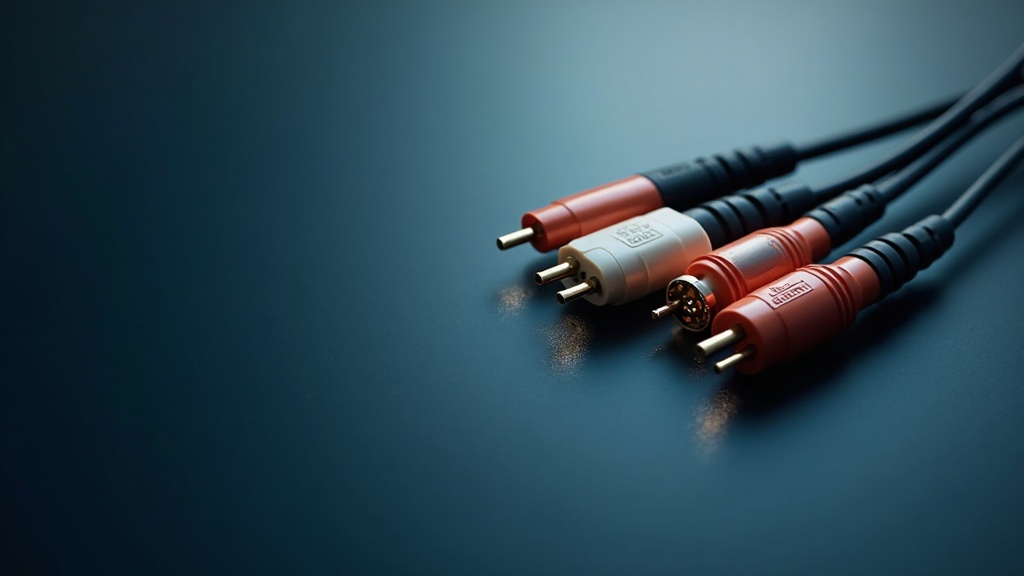
Patch Cables Guide: Types, Uses, and Buying Tips
Learn how patch cables connect your network devices and what to look for when buying them. This guide covers types, performance standards, and practical selection tips for reliable connectivity.
Table of Contents
- What Are Patch Cables?
- Types and Categories
- Performance and Testing
- Market Trends
- FAQ
- Comparison
- Practical Tips
- Final Thoughts on Patch Cables
Patch Cables in Context
- The global patch cable market was valued at USD 3.8 billion in 2024 and is projected to reach USD 6.2 billion by 2030 (Strategic Market Research, 2024)[1].
- A 2025 study found that 62% of Cat 6A patch cables tested on the European market failed to meet transmission performance requirements (Keline, 2025)[2].
- The market is expected to grow at a compound annual growth rate (CAGR) of 7.5% from 2024 to 2030 (Strategic Market Research, 2024)[1].
What Are Patch Cables?
Patch cables, also known as patch cords or patch leads, are short lengths of cable with connectors on both ends. They are used to connect electronic devices in a network, such as a computer to a wall outlet, a switch to a router, or a server to a patch panel. Unlike permanent cabling that runs through walls, patch cables are flexible and designed for frequent reconnection.
These cables come in various types, with the most common being Ethernet (twisted pair), fiber optic, and coaxial. The choice of cable depends on the network speed required, the distance between devices, and the environment. For most home and office networks, Cat5e or Cat6 Ethernet patch cables are standard. For high-speed data centers, fiber optic or Cat6A cables may be necessary.
Understanding the specifications of patch cables is crucial for network performance. Using a cable that does not meet the required standard can lead to data loss, slower speeds, and connection instability. As Petr Mikl, Technical Director at Keline, noted, “Despite advances in standards, technologies, and testing methods, the findings demonstrate that 62% of patch cables still fail to meet Cat 6A transmission performance requirements” (Keline, 2025)[2].
Types and Categories
Ethernet Categories
Ethernet patch cables are categorized by their performance capabilities, known as “Cat” standards. The most common categories include Cat5e, Cat6, Cat6a, and Cat7. Each category supports different bandwidths and data rates. Cat5e supports up to 1 Gbps at 100 MHz, while Cat6 can handle 10 Gbps at 250 MHz over shorter distances. Cat6a is an augmented version of Cat6, supporting 10 Gbps at 500 MHz over the full 100-meter distance.
For most modern home networks, Cat6 is a good balance of cost and performance. For data centers or high-bandwidth applications, Cat6a or Cat7 is recommended. It is important to note that the cable category must match the network equipment to achieve the advertised speeds.
Fiber Optic Cables
Fiber optic patch cables use light to transmit data, offering much higher speeds and longer distances than copper cables. They are immune to electromagnetic interference (EMI), making them ideal for environments with heavy electrical noise. Common fiber optic connector types include LC, SC, and ST. Single-mode fiber (SMF) is used for long-distance links, while multi-mode fiber (MMF) is used for shorter distances within buildings or data centers.
Fiber patch cables are more expensive and fragile than copper cables, but they are essential for backbone connections and high-speed networks. As the demand for high-speed internet grows, fiber optic patch cables are becoming more common in residential and business installations.
Performance and Testing
Performance of patch cables is measured by their ability to transmit data without errors. Key parameters include insertion loss, return loss, and near-end crosstalk (NEXT). These parameters are tested to ensure the cable meets its category specifications. Poorly manufactured cables can cause signal degradation, leading to network slowdowns and errors.
A 2025 study by Keline found that “only 38% of the tested patch cords met the Cat 6A requirements for component-level performance, underscoring that low-cost offers often correlate with compromised quality control” (Keline, 2025)[2]. This highlights the importance of buying from reputable manufacturers and ensuring cables are certified. When purchasing patch cables, look for certification from organizations like UL or ETL to guarantee performance.
Testing can be done using a cable certifier, which measures the cable’s electrical characteristics. For home users, a simple continuity tester can check if the cable is wired correctly. For professional installations, a full certification test is recommended to ensure the cable meets the required standard. A helpful resource for understanding cable specifications is the Fluke Networks guide on cable categories.
Market Trends
The global patch cable market is experiencing significant growth. According to Strategic Market Research, the market was valued at USD 3.8 billion in 2024 and is expected to reach USD 6.2 billion by 2030, growing at a CAGR of 7.5% (Strategic Market Research, 2024)[1]. This growth is driven by the expansion of data centers, 5G infrastructure, and the increasing number of connected devices.
Another report from Maximize Market Research projects the market will reach USD 8.09 billion by 2030, with a higher CAGR of 10.2% (Maximize Market Research, 2024)[3]. The discrepancy between reports is due to different market definitions and methodologies. Both reports agree, however, that the demand for high-speed connectivity is a major driver.
The rise of IoT devices and smart homes is also fueling demand for patch cables. As more devices connect to networks, the need for reliable, high-performance cabling increases. Additionally, the shift to remote work has led to more home network upgrades, further boosting the market.
Important Questions About Patch Cables
What is the difference between Cat5e and Cat6 patch cables?
Cat5e (Category 5 enhanced) supports speeds up to 1 Gbps at 100 MHz, while Cat6 (Category 6) supports up to 10 Gbps at 250 MHz over distances up to 55 meters. Cat6 has stricter specifications for crosstalk and system noise. For most home networks, Cat5e is sufficient, but Cat6 offers better future-proofing for higher speeds. The connectors on Cat6 cables are also typically larger and have a spline inside to reduce interference.
Can I use a Cat6 cable with a Cat5e network?
Yes, Cat6 cables are backward compatible with Cat5e networks. The cable will operate at the highest speed supported by the network equipment, which is typically 1 Gbps for most home routers. Using a Cat6 cable on a Cat5e network will not improve speed, but it can provide better signal quality and reduce interference. It is a good choice for future-proofing your network.
How long can a patch cable be?
For Ethernet cables, the maximum recommended length is 100 meters (328 feet) for a single segment. This includes both the patch cables and the permanent cabling in the wall. For longer distances, you need a network switch or a repeater. For fiber optic cables, distances can be much longer, ranging from a few hundred meters for multi-mode fiber to several kilometers for single-mode fiber.
What does a patch cable look like?
A typical Ethernet patch cable looks like a thicker telephone cable with an RJ45 connector (a clear plastic plug) on each end. It is usually short, ranging from a few inches to several feet. The cable itself is often round and made of stranded copper wire for flexibility. Fiber optic patch cables are thinner and have different connectors, like LC or SC, which are smaller than RJ45 connectors.
Comparison: Cat5e vs. Cat6 vs. Cat6a Patch Cables
Choosing the right Ethernet patch cable depends on your speed needs and budget. The table below compares the three most common categories for home and office use.
| Feature | Cat5e | Cat6 | Cat6a |
|---|---|---|---|
| Max Speed | 1 Gbps | 10 Gbps (up to 55m) | 10 Gbps (up to 100m) |
| Frequency | 100 MHz | 250 MHz | 500 MHz |
| Cost | Low | Medium | High |
| Best For | Basic home networks | Home and small office | Data centers and high-speed |
Practical Tips for Choosing and Using Patch Cables
Here are some actionable tips to help you get the best performance from your patch cables:
- Match the cable to your equipment: Always check the specifications of your router, switch, and network card. Using a Cat6 cable with a 1 Gbps router is fine, but you won’t get 10 Gbps speeds. For most home users, Cat5e or Cat6 is sufficient.
- Avoid kinking and bending: Patch cables are flexible, but sharp bends can damage the internal wires. Use cable management tools to keep cables organized and avoid running them under carpets or heavy furniture.
- Buy certified cables: Look for cables that are certified by a third party like UL or ETL. This ensures they meet the performance standards of their category. Avoid very cheap cables, as they may not perform as advertised.
- Consider shielded cables for noisy environments: If your cables run near power lines, motors, or fluorescent lights, consider using shielded (STP) cables to reduce electromagnetic interference. This is especially important in industrial settings.
For more about Hdmi cables for laptops, see explore hdmi cables for laptops in depth.
Final Thoughts on Patch Cables
Patch cables are the unsung heroes of modern connectivity. They are simple in concept but critical for network performance. By understanding the different types, categories, and testing standards, you can make informed choices that ensure reliable, high-speed connections. Whether you are setting up a home office or a data center, investing in quality patch cables pays off in reduced downtime and faster data transfer.
Further Reading
- Patch Cable Market Size ($6.2 Billion) 2030. Strategic Market Research.
https://www.strategicmarketresearch.com/market-report/patch-cable-market - Evaluation of Cat 6A Patch Cables on the European Market: A 10-Year Follow-Up. Keline.
https://www.keline.com/evaluation-of-cat-6a-patch-cables-on-the-european-market-a-10-year-follow-up-306 - Global Patch Cable Market. Maximize Market Research.
https://www.maximizemarketresearch.com/market-report/global-patch-cable-market/75915/ - LAN Cable Market Size, Share & Trends 2032. SNS Insider.
https://www.snsinsider.com/reports/lan-cable-market-2441