Ornamental Trees Gardening Applications: A Complete Guide
Explore how ornamental trees gardening applications can transform your landscape. This guide covers selection, planting, care, and design strategies for using ornamental trees to enhance property value and create stunning four-season gardens.
Table of Contents
- What Are Ornamental Trees? Understanding the Basics
- Selecting the Right Ornamental Trees for Your Garden
- Planting and Caring for Ornamental Trees
- Designing with Ornamental Trees for Year-Round Appeal
- Frequently Asked Questions
- Comparison of Ornamental Tree Approaches
- Practical Tips for Success
- Final Thoughts on Ornamental Trees Gardening Applications
Ornamental trees gardening applications are the practice of using aesthetically pleasing trees to enhance landscape design. These trees provide visual structure, seasonal color, and can increase property values by 7%–19% (USDA Forest Service, 2026)[1]. Proper selection, spacing, and care are essential for success.
- Mature landscaping with ornamental trees can increase home values by 7%–19% (USDA Forest Service, 2026)[1]
- Standard ornamental trees typically reach 20–30 feet in height at maturity (Natura Nation, 2026)[4]
- Recommended spacing between standard ornamental trees is 15 feet (Natura Nation, 2026)[2]
- Woody ornamental trees fall into 3 main groups: shade/foliage, flowering, and fruit (Indira Gandhi National Open University, 2025)[6]
Introduction
Ornamental trees gardening applications offer homeowners and landscapers a powerful way to elevate outdoor spaces. Unlike shade trees grown primarily for canopy coverage or fruit trees cultivated for harvest, ornamental trees are selected for their aesthetic contributions – striking flowers, unique bark, vibrant autumn foliage, or graceful form. These trees serve as living sculptures that define garden structure, create focal points, and provide seasonal interest throughout the year. Whether you are designing a small urban courtyard or a sprawling suburban landscape, understanding how to choose, plant, and maintain ornamental trees is essential. This guide covers the fundamentals of ornamental tree selection, proper planting techniques, ongoing care requirements, and design strategies to maximize visual impact. By the end, you will have the knowledge to incorporate these beautiful trees into your own garden with confidence.
What Are Ornamental Trees? Understanding the Basics
An ornamental tree is any tree grown primarily for its decorative value rather than for practical purposes like shade, timber, or fruit production. As one horticulture team explains, “An ornamental tree is one that is grown purely for its aesthetic value; gardeners choose them because they transform outdoor spaces with colour, form and texture rather than for shade or fruit production” (Direct Plants Horticulture Team, 2026)[5]. This distinction is central to understanding ornamental trees gardening applications – the focus is always on visual and sensory appeal.
Woody ornamental trees are categorized into three main groups: shade and foliage trees, flowering trees, and fruit trees (Indira Gandhi National Open University, 2025)[6]. Shade and foliage types, such as Japanese maples and weeping willows, contribute texture and color through their leaves. Flowering trees, including dogwoods, magnolias, and ornamental cherries, provide spectacular seasonal blooms. Fruit-bearing ornamentals like crabapples and serviceberries offer edible berries alongside spring flowers and autumn color. Each group serves a different design purpose, and many gardeners combine all three for layered interest.
The appeal of ornamental trees extends beyond mere decoration. A nursery editorial team notes, “Ornamental trees provide a balance of visual appeal, seasonal colour, and benefits for local wildlife – making them excellent options for British gardens where space and biodiversity both matter” (Bowhayes Trees Nursery Editorial Team, 2026)[3]. This wildlife benefit includes providing nectar for pollinators, berries for birds, and shelter for beneficial insects. When selecting trees, consider the mature size – standard ornamentals typically reach 20–30 feet in height (Natura Nation, 2026)[4] – and ensure adequate space for root development and canopy spread. Proper selection at this stage prevents future problems and maximizes long-term enjoyment.
Selecting the Right Ornamental Trees for Your Garden
Choosing the right ornamental trees for your garden begins with a thorough assessment of site conditions. Sunlight exposure, soil type, drainage, and hardiness zone are critical factors that determine which species will thrive. A tree that requires full sun will struggle in a shaded corner, while a moisture-loving species may fail in dry, sandy soil. Always match the tree to the site, not the other way around. Consulting local extension services or nursery professionals can provide region-specific recommendations.
Consider the tree’s mature dimensions carefully. Standard ornamental trees typically reach 20–30 feet in height and require spacing of 15 feet between specimens (Natura Nation, 2026)[2]. Dwarf varieties, such as certain Japanese maples or compact crabapples, stay under 10 feet and suit smaller gardens or container planting. Weeping forms create dramatic focal points, while upright, columnar shapes work well for allees or narrow spaces. The USDA Forest Service reports that mature landscaping with ornamental trees can increase home values by 7%–19% (2026)[1], making thoughtful selection a wise financial investment.
Seasonal interest should guide your choice. Some trees offer spring blossoms, summer foliage, autumn color, and winter bark interest all in one package. Others peak in a single season. The Bowhayes Trees Nursery Editorial Team emphasizes that ornamental trees provide “seasonal colour” and benefits for local wildlife (2026)[3]. Aim for a mix of early, mid, and late performers to ensure continuous appeal. For example, pair an early-flowering cherry with a summer-blooming magnolia and a late-season smoke bush for a dynamic display. Also consider pest resistance and disease susceptibility – some species, like certain dogwoods, are prone to anthracnose in humid climates.
Planting and Caring for Ornamental Trees
Proper planting sets the foundation for a healthy ornamental tree. Dig a hole two to three times wider than the root ball but no deeper – the root flare should sit slightly above ground level. Backfill with native soil, avoiding heavy amendments that can discourage root expansion. Water thoroughly after planting and apply 2–4 inches of organic mulch around the base, keeping it at least 2 inches away from the trunk to prevent rot (Live to Plant, 2026)[7]. Staking is generally unnecessary for most ornamentals unless the site is windy.
Ongoing care involves fertilization, watering, and pruning. A typical spring fertilization cycle of once per year supports healthy growth and flowering (Gardening Know How, 2026)[8]. Use a balanced, slow-release fertilizer formulated for trees and shrubs. As one gardening resource advises, “Most ornamental trees look their best with a regular program of fertilization, usually in spring, and supplemental watering during dry spells, so their performance in the garden depends as much on ongoing care as on the initial choice of species” (Gardening Know How Editorial Team, 2026)[8]. Established trees benefit from deep, infrequent watering rather than frequent shallow irrigation (Live to Plant, 2026)[9] – this encourages deep root growth and drought tolerance.
Pruning requirements vary by species. Most flowering ornamentals benefit from light pruning immediately after bloom to shape the canopy and remove dead wood. Avoid heavy pruning in late summer or fall, as this can stimulate new growth vulnerable to winter damage. Monitor for common pests like aphids, scale, and borers, and treat with horticultural oils or insecticidal soaps when necessary. Regular inspection and prompt action keep trees vigorous and reduce the need for drastic interventions. The mulch depth of 2–4 inches should be maintained annually, as organic matter decomposes over time (Live to Plant, 2026)[3].
Designing with Ornamental Trees for Year-Round Appeal
Effective design with ornamental trees requires thinking beyond a single season. The Natura Nation Landscape Design Team explains, “Seasonal layering ensures year‑round impact; pairing early‑blooming ornamental cherries with late‑flowering trees and underplanting with bulbs that bloom sequentially turns trees into the backbone of a dynamic, four‑season garden” (2026)[9]. This approach involves selecting trees that offer interest in different seasons and combining them with complementary perennials, shrubs, and groundcovers.
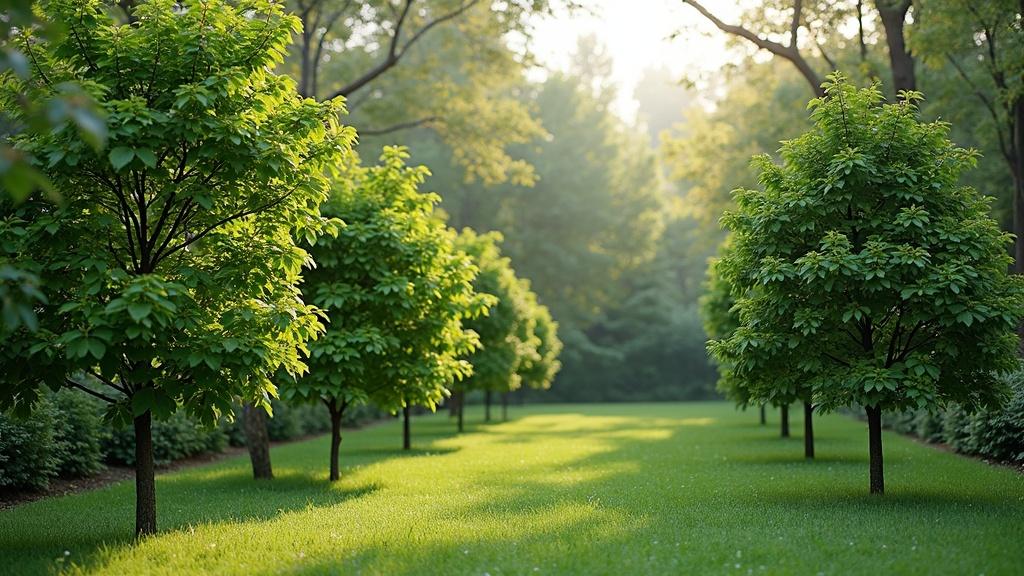
Use ornamental trees as structural anchors in the landscape. Place a specimen tree – such as a weeping cherry or Japanese maple – at a focal point like a garden entrance, patio corner, or near a water feature. Flank driveways or pathways with pairs of upright ornamentals like columnar hornbeams or crabapples to create a formal allee. Group three to five trees of the same species in a naturalistic cluster for a woodland effect. The spacing of 15 feet between standards (Natura Nation, 2026)[2] ensures each tree has room to develop its natural form without crowding.
Consider the tree’s role in wildlife support. Flowering ornamentals attract pollinators like bees and butterflies, while berry-producing species feed birds through fall and winter. The Bowhayes Trees Nursery Editorial Team highlights the benefit of ornamental trees for local wildlife (2026)[3], making them valuable additions to ornamental trees gardening applications that prioritize biodiversity. Underplant with native wildflowers and grasses to create a layered habitat. Avoid invasive species and choose non-invasive alternatives that support local ecosystems without escaping cultivation.
Frequently Asked Questions
What is the best time of year to plant ornamental trees?
How often should I water newly planted ornamental trees?
Can ornamental trees grow in containers?
What are the best ornamental trees for small gardens?
Comparison of Ornamental Tree Approaches
Different gardening strategies suit different goals. The table below compares three common approaches to using ornamental trees in the landscape, helping you choose the best method for your space and preferences.
| Approach | Primary Focus | Best For | Key Considerations |
|---|---|---|---|
| Specimen Planting | Single tree as focal point | Small gardens, entryways, patios | Choose trees with striking form, flowers, or bark; requires open space to shine |
| Group Planting | Multiple trees for mass effect | Large borders, naturalized areas | Use odd numbers (3, 5, 7) for natural look; space 15 feet apart |
| Allee or Avenue | Linear rows for structure | Driveways, pathways, property lines | Select uniform, upright species; maintain consistent spacing |
Practical Tips for Success
Follow these actionable tips to get the most from your ornamental trees:
- Match tree to site conditions – check sunlight, soil pH, drainage, and hardiness zone before purchasing. A poor match leads to weak growth and increased maintenance.
- Apply mulch correctly – spread 2–4 inches of organic mulch in a ring around the tree, keeping it 2 inches away from the trunk to prevent rot and rodent damage (Live to Plant, 2026)[3].
- Water deeply and infrequently – once established, ornamental trees benefit from deep watering sessions that saturate the root zone, rather than frequent light sprinklings that encourage shallow roots (Live to Plant, 2026)[9].
- Fertilize in spring – a single annual application of balanced slow-release fertilizer supports flowering and foliage health (Gardening Know How, 2026)[8].
- Prune for structure – remove dead, diseased, or crossing branches in late winter or after flowering. Avoid heavy pruning in late summer.
- Plan for seasonal layering – combine early, mid, and late performers for continuous interest, as recommended by landscape design professionals (Natura Nation, 2026)[9].
For more about Ornamental trees gardening applications, see get expert advice on ornamental trees gardening applications.
Final Thoughts on Ornamental Trees Gardening Applications
Ornamental trees gardening applications offer a rewarding way to enhance any outdoor space. From the initial selection of species suited to your site to the ongoing care that keeps them thriving, each step contributes to a landscape that provides beauty, wildlife habitat, and long-term property value. The USDA Forest Service notes that mature landscaping with ornamental trees can increase home values by 7%–19% (2026)[1], making this a wise investment. Start by assessing your garden’s conditions, choose trees that match your design goals, and commit to proper planting and maintenance. For more detailed guidance, explore additional resources or consult a local horticulturist.
Useful Resources
- Transform Your Yard with Ornamental Trees. Melad Tree Farm Idaho.
https://meladtreefarmidaho.com/post/transform-your-yard-with-ornamental-trees - Ornamental Trees – Living Art for Your Landscape. Natura Nation.
https://www.naturanation.com/blogs/natura-nation-journal/ornamental-trees-living-art-for-your-landscape - Using Ornamental Trees to Glamourize Your Backyard Landscape. Live to Plant.
https://livetoplant.com/using-ornamental-trees-to-glamourize-your-backyard-landscape/ - Unit-1: Ornamental Trees. Indira Gandhi National Open University – School of Agriculture.
https://www.egyankosh.ac.in/bitstream/123456789/73043/1/Unit-1.pdf - What Is an Ornamental Tree: Types of Ornamental Trees for Gardens. Gardening Know How.
https://www.gardeningknowhow.com/ornamental/trees/tgen/ornamental-trees-for-gardens.htm - Ornamental Garden Trees – Why Gardeners Love Them. Direct Plants.
https://directplants.co.uk/blog/ornamental-garden-trees-why-gardeners-love-them/ - Ornamental Trees UK – The Complete Guide for British Gardens. Bowhayes Trees.
https://www.bowhayestrees.co.uk/post/ornamental-trees-uk-the-complete-guide-for-british-gardens